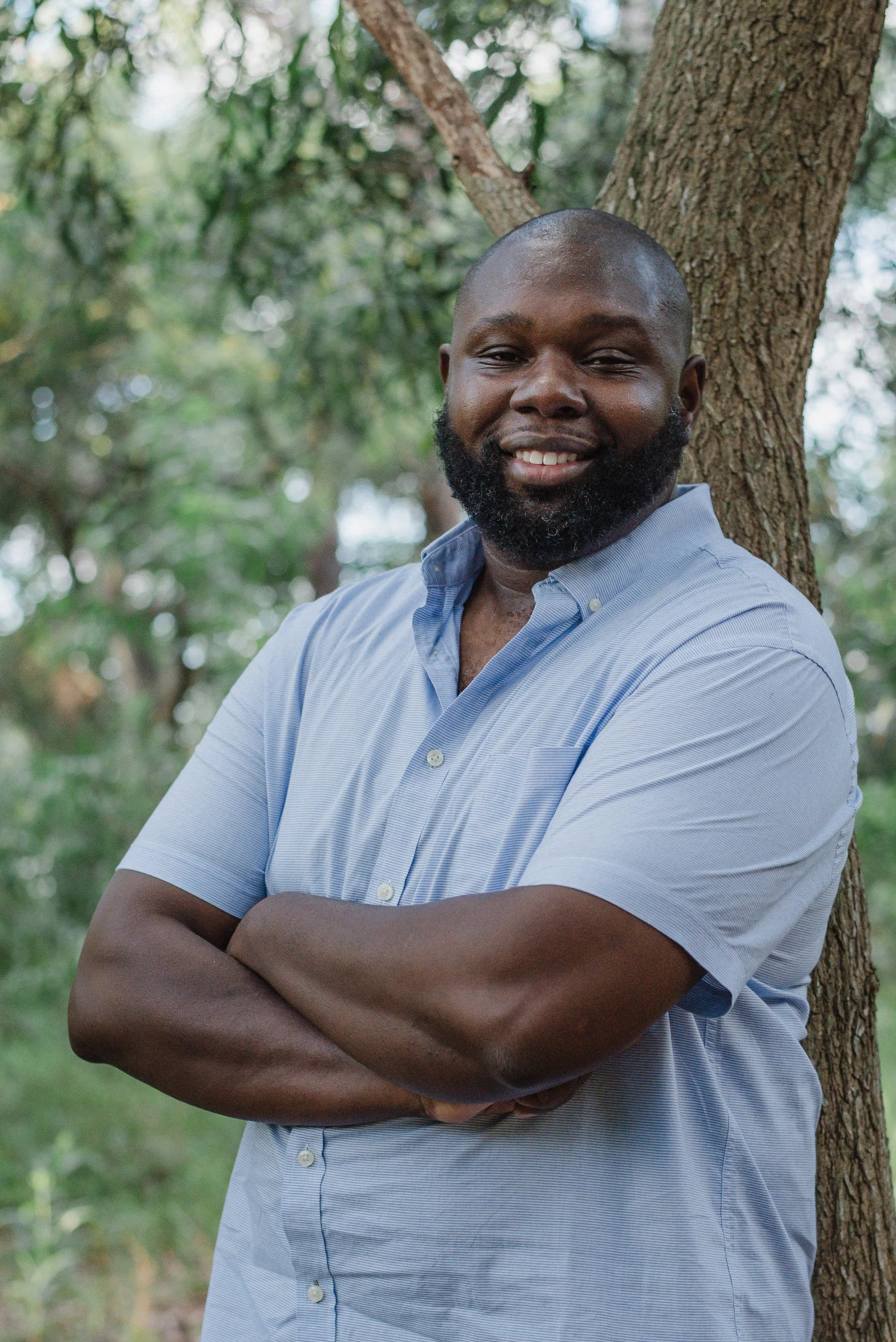
Why Michael James Counseling
A place to be real.
Most of us carry quiet questions into every room. Am I accepted here? Do I belong? Is anyone really with me in this? Am I safe? When the answer has been no for long enough, we learn to perform instead of rest.
I call what heals the ABCs of mental health: Acceptance, Belonging, Connectedness, and Safety. My work is to help you find them, first with me, then with the people who matter most to you, so you can be real and unafraid to heal.
It can be hard to find a therapist who looks like us. I know, and I know how much it matters.
I come from a long line of caring people.
My mother and father were Southern Black Americans born in the 1930s, and they came of age under Jim Crow. By the time I was coming of age in the 1980s, the country around them spoke as if that terror had never happened. No one acknowledged what they had lived through, so they carried it quietly and kept going. They never taught me to hate anyone.
Instead, they became the people in our church that others came to when they were in trouble. When young women found themselves "in the family way," my parents were the ones they trusted with their children. My mother taught students at risk of dropping out, and later became a guidance counselor. She invited those students to church and to Sunday dinner afterward, and she became a second mother to many of them.
My father was an uncle by blood to a dozen, and an uncle by love to a hundred.
That spirit is in my soul and in my bones.
Leaving the military wasn't leaving service.
I served nine years in the U.S. Coast Guard, working in electronics. Somewhere along the way I realized my deepest fulfillment came not from fixing equipment but from walking with people.
That led me to open a sober residence in Boynton Beach, eight bedrooms and fourteen beds, run as a ministry. Most of the men who came had no program behind them and no family left to call. I remember agreeing to take in a new resident who said he needed to go get his things. He led me to a bush. Everything he owned was in a bag beneath it. I stayed overnight with the men once a week, because I wanted them to know someone was with them.
The longer I walked with them, the clearer it became that caring wasn't enough. If I was going to really help, I needed training. So I went back to school and became a social worker, and I pursued theological training in seminary.
You are more than your symptoms.
Social workers are trained to see the person in their environment. That means your mind, yes, and your emotions, certainly. It also means your relationships, your family, your community and the systems you live inside, and how each of them shapes the others. I try to understand you through that whole picture, not one piece of it.
That lens is part of how couples therapy found me. Early on, therapists who didn't want to work with couples kept referring them to me. Guiding two people who love each other through disconnection can feel like steering a herd of wild horses with your pinky finger. But where others found it hard not to take sides, the romantic in me could see both. I could validate each partner without losing the other. As more couples came, I looked for the most effective way to help them and chose Emotionally Focused Therapy.
Emotionally Focused Couples Therapy
Advanced training · ICEEFT Externship and Core Skills
Helps partners step out of the cycle of fighting or withdrawing and find each other again.
EMDR
Trained
Helps your mind finish processing painful memories so they stop feeling like the present.
Acceptance and Commitment Therapy
Trained
Helps you stop arguing with your own mind and move toward what matters to you.
Cognitive Behavioral Therapy
Trained
Helps you notice and change the thought patterns that keep you stuck.
Groups
Healing happens in relationship, so I built rooms for the whole family.
When I started, I wanted to be one place a family could turn: the couple, the parent, the young adult, the person carrying something no one else can see. Couples work was the first door that opened. Groups are how I open the rest.
Through Unafraid to Heal and Real Men Heal, there is a room for nearly everyone in a family: single adults learning to love differently, women carrying more than anyone sees, men ready to stop carrying the weight alone, and teenagers learning to trust themselves again. Groups let me care for the whole person, and in time, the whole family.
Bear one another's burdens.
“Bear one another's burdens.”GALATIANS 6:2, ESV
My faith is the root of how I care for people. My parents lived that verse, and I have tried to. If faith is part of how you heal, it's welcome here. If it isn't, nothing about your care changes. Either way, you'll be met with grace, acceptance and honesty, and you won't need a mask.
I delight in helping people. I believe every person is valuable and precious, and that healing is worth facing toward. Next to being a father, being part of someone's restoration is the joy of my life. It would be an honor and a privilege to hold space for you.
Sessions are virtual, by secure video, for adults in Florida, Texas, North Carolina, Virginia, Missouri and New Jersey.
Tell me a little about what brought you here. Send me a message, and I'll reach out to you personally.